If you follow longevity science, cancer research, or metabolic health, you’ve probably heard the term mTOR pathway. It shows up everywhere — from bodybuilding forums to anti‑aging studies — yet most people don’t fully understand what it is or why it matters.
mTOR isn’t a supplement, a hormone, or a fad. It’s a central cellular pathway that acts like a master switch, deciding when your cells should grow, repair, or conserve energy. When mTOR is balanced, your body thrives. When it’s chronically overstimulated or suppressed, things can go wrong.
Let’s break down what mTOR actually does and why scientists consider it one of the most powerful levers of human health.
What Is mTOR pathway?
mTOR (mechanistic Target of Rapamycin) is a protein kinase — basically a molecular controller — found inside your cells. It responds to signals like:
- Nutrient availability
- Stress
- Growth factors (like insulin)
- Energy levels
- Cellular damage
Based on these inputs, mTOR pathway decides whether your cells should:
- Grow and build
- Repair and recycle
- Slow down and conserve energy
Think of mTOR as the thermostat for cellular activity.
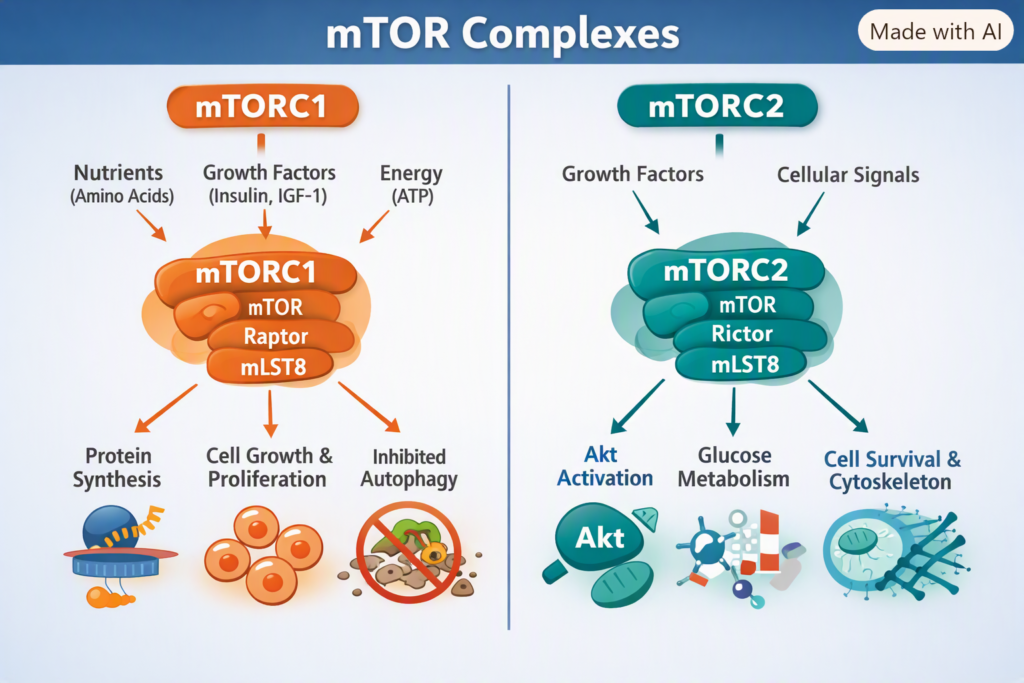
The Two mTOR Pathway Complexes
mTOR works through two distinct complexes:
mTORC1 — The Growth Accelerator
mTORC1 promotes:
- Protein synthesis
- Muscle growth
- Cell division
- Fat storage
- Reduced autophagy (cellular cleanup)
It’s activated by nutrients — especially protein and amino acids like leucine.
mTORC2 — The Metabolic Regulator
mTORC2 influences:
- Insulin signaling
- Glucose metabolism
- Cell survival
- Cytoskeleton organization
It’s less understood but crucial for metabolic health.
Why mTOR pathway Matters
1. Aging and Longevity
High mTOR activity accelerates aging by reducing autophagy — the process where cells clean out damaged components. Low mTOR activity (like during fasting) increases autophagy, which is linked to:
- Longer lifespan in animals
- Better metabolic health
- Reduced inflammation
This is why fasting, caloric restriction, and certain medications (like rapamycin) are being studied for longevity.
2. Muscle Growth and Fitness
Bodybuilders love mTOR because mTORC1 drives muscle protein synthesis. Resistance training + protein = strong mTOR activation → muscle growth.
But chronically elevated mTOR without recovery can lead to inflammation and metabolic stress.
3. Cancer Research
Cancer cells hijack mTOR to fuel uncontrolled growth.
This is why mTOR inhibitors are used in certain cancer treatments — they slow down cell division.
4. Metabolic Health
mTORC2 plays a major role in insulin sensitivity. Dysregulated mTORC2 is linked to:
- Type 2 diabetes
- Obesity
- Fatty liver disease
Balancing mTOR is key — not too high, not too low.
How to Balance mTOR pathway Naturally
Increase mTOR (for growth and repair):
- Strength training
- Adequate protein intake
- Post‑workout nutrition
- Good sleep
Decrease mTOR (for longevity and cellular cleanup):
- Intermittent fasting
- Caloric restriction
- Low‑protein periods
- Avoiding constant snacking
- Certain compounds like rapamycin (medical supervision only)
The healthiest approach is cycling — periods of growth and periods of repair.
mTOR: A Powerful Lever for Health
mTOR isn’t “good” or “bad.” It’s essential. You need it high sometimes (growth, healing) and low other times (repair, longevity).
Understanding mTOR pathway gives you insight into:
- Why fasting works
- Why protein builds muscle
- Why overeating accelerates aging
- Why metabolic diseases develop
- Why certain drugs may extend lifespan
It’s one of the most important biological switches we have — and scientists are only beginning to unlock its full potential.
Leave a Reply